
Blog
Dental hygiene tips for healthy teeth & gums
How Do Braces Move Teeth? Here’s the Science Explained
I got braces at thirteen and spent the next two years mostly just annoyed by them. Tightening appointments, three days of soreness, and foods I had to cut out entirely. The orthodontist did his thing, I showed up when I was told, and eventually the metal came off. It wasn’t until I started researching “how do braces move teeth” properly that I realized how much biology is actually involved.
What Is Actually Happening Inside the Jaw When Braces Are On
I assumed for years that teeth were basically anchored in place, like a post set in concrete. Turns out there’s a thin layer of connective tissue sitting between each tooth and its socket called the periodontal ligament. According to the American Association of Orthodontists’ explanation of how braces work, the body reads the pressure from the braces and starts breaking down bone on the compressed side while building new bone on the stretched side. The tooth follows.
How Do Teeth Move With Braces on a Cellular Level
This is the part that surprised me most when I looked into it. The body sends two different types of cells to handle what’s happening on each side of a moving tooth.
On the compression side, osteoclasts break down the bone to clear a path. On the other side, where the tooth is pulling away, osteoblasts move in and start filling the gap with new bone.
The tooth moves into the gap. New bone forms where it used to be.
Mayo Clinic’s overview of the braces process describes this as a gradual biological response to sustained pressure, which is why treatment takes months. Too much force at once and the tissue gets damaged rather than remodeled. The pace isn’t incidental.
What Do the Brackets and Wires Actually Do
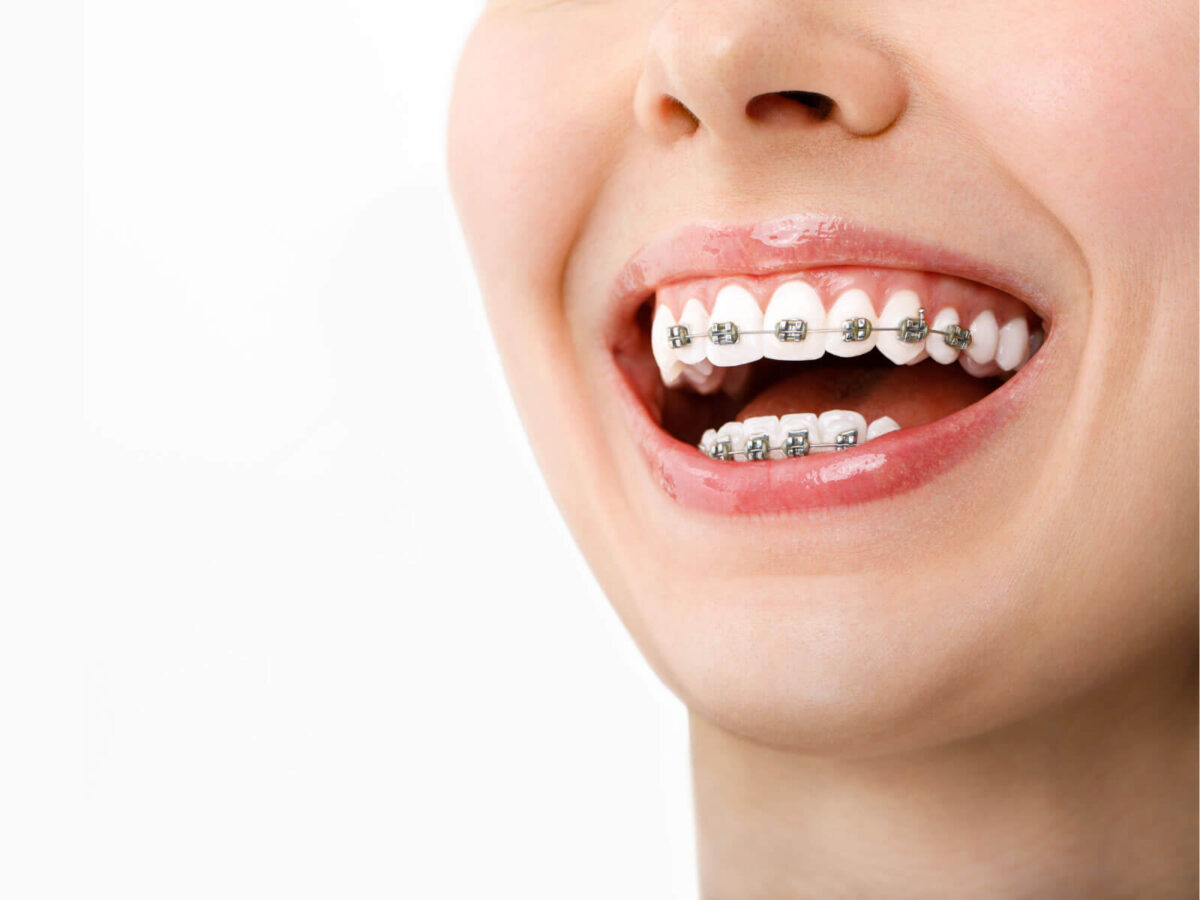
The brackets bonded to each tooth are anchors. They don’t move teeth on their own. What they do is give the archwire something to act through.
The archwire runs across all the brackets and is where most of the force comes from. It’s shaped to match the intended final position of the teeth, and because the wire wants to return to that shape, it pulls and pushes each tooth gradually toward where it needs to be. Part of how braces work to move teeth is that this pressure is continuous, not just something that happens during appointments.
Elastic bands handle something the wire can’t do on its own, mostly the relationship between the upper and lower jaw. Plenty of people stop wearing them within the first week. The timeline suffers for it.
How Do Braces Work to Move Teeth at Different Rates
Not all tooth movements happen at the same speed. I didn’t know that going in, and it explains a lot about why treatment feels uneven partway through.
Tipping a tooth in one direction is the fastest movement. The ligament compresses, the osteoclasts respond, and it shifts relatively quickly. Rotating a tooth takes longer. Moving a tooth bodily through bone is the slowest because the remodeling has to happen across more surface area and in more than one direction at once.
According to the American Association of Orthodontists’ guidance on treatment timelines, individual biology also plays a role in how braces work to move teeth. Some people’s bones remodel faster. Younger bone tends to respond more readily, which is part of why certain issues are better addressed earlier in life.
Why Does It Hurt After Adjustments
The soreness after a tightening appointment is the part of how do teeth move with braces that most people feel but never quite understand. The wire has been adjusted to apply force in a slightly different direction, and the periodontal ligament responds with inflammation. That’s what the soreness is. Most of it passes within two days. According to the Cleveland Clinic’s overview of braces and orthodontic treatment, over-the-counter pain relief and soft food for a day or two are usually enough to get through it.
Why Do You Need a Retainer After Braces Come Off
Taking braces off doesn’t mean the bone is done. It’s still consolidating around the new positions, sometimes for months afterward. And the periodontal ligament has a long memory. Leave the teeth unsupported, and they start drifting back.
According to the AAO’s patient guidance on orthodontic retention, retainers are what maintain the result while the bone fully consolidates around the new positions. That process takes longer than most people expect.
Someone I know wore her retainer religiously for about a year and then stopped. Felt pointless by then. She noticed shifting, maybe two years later, and went back in. Her orthodontist was not surprised.
Does Age Affect How Braces Move Teeth
Age matters more than most people going into treatment expect. A fourteen-year-old’s jaw is still forming. That changes what’s possible. Things like widening the arch or redirecting growth can only happen while the bone is still actively developing, and once it’s done, that window is just gone.
I’ve spoken to adults who assumed how braces move teeth works the same at any age. The mechanics are the same. The biology isn’t quite. Adult bone still remodels, just more slowly, which is why a case that wraps up in eighteen months for a teenager might take two years for someone in their thirties.
Some adult cases also end up needing extractions to create space that a growing jaw would have handled on its own. According to the American Association of Orthodontists’ guidance on adult orthodontic treatment, starting earlier keeps more options available. What’s possible at fourteen isn’t always possible at thirty-four.
FAQ
Do braces move teeth every single day?
Technically yes. The remodeling process doesn’t pause between appointments. You won’t feel it happening, but the bone is responding to pressure the whole time the braces are on.
I’m getting braces. Will they damage my teeth?
Not when the force is applied correctly. Root resorption can happen when too much pressure is used over time, but that’s why adjustments get monitored throughout rather than just set and forgotten. I’ve never seen it come up as a serious issue in a well-managed case.
Why do some teeth move faster than others during treatment?
Root shape and size vary across the mouth, and certain movements are just mechanically easier than others. Someone I know spent three months watching one tooth barely shift while everything around it moved. Turns out that it was sequenced that way on purpose.
Can teeth move back after braces without a retainer?
Yes. Quicker than most people expect, actually. I know someone who skipped the retainer for a few months and had to go back into treatment. The teeth don’t stay put on their own.
Conclusion
How do braces move teeth isn’t really about metal and wires. I didn’t appreciate that until I actually looked into it. The hardware sets the direction. What happens inside the bone is the part most people never think about. That’s where the whole process actually lives.
How do braces work to move teeth comes down to what the bone does under sustained pressure over time. That’s why it takes months. That’s why the retainer matters after. Skip it, and the bone that shifted once will shift again, just in the wrong direction.
Not sure where your own teeth fall after reading all this? Book the consultation. The orthodontist can walk you through what your specific case actually involves.

