
Blog
Dental hygiene tips for healthy teeth & gums
Canker Sores vs. Cold Sores: What’s the Difference?
Two patients in the same week last month, both convinced they had the same thing. One had a sore inside her cheek she’d picked up biting down mid-sentence. The other pointed at a blister on his lip and told me it had been showing up in that exact spot since primary school.
Patients ask me “what is the difference between canker sores and cold sores” almost weekly. It comes down to location and cause. One shows up inside the mouth and has nothing to do with a virus. The other shows up on the lip and spreads to other people through the herpes simplex virus.
Nobody should feel bad about confusing them. They both hurt, they both arrive without warning, and neither makes lunch a pleasant experience. Past that, the two have almost nothing in common.
TL;DR
- A canker sore lives inside your mouth and can’t be passed to anyone else.
- A cold sore appears on the lip itself, and because herpes simplex causes it, you can pass it to someone else.
- Canker sores turn up after stress, a bitten cheek, or a stretch of low iron. Cold sores need no outside trigger at all, just the virus deciding to wake up.
- Both typically clear within one to two weeks without treatment.
- For canker sores, you’re managing pain with gels and rinses. For cold sores, an antiviral cream or tablet goes after the virus itself.
Canker Sores and Cold Sores – What Is the Difference Between
Location gives it away before anything else does. Cleveland Clinic notes that cold sores typically form on your lips or around your mouth, while canker sores form entirely inside your mouth.
Contagion is the bigger split, practically speaking. Cold sores spread through direct contact, whether that’s a kiss or a shared drink. Canker sores don’t spread at all, full stop.
Cause shapes everything else downstream, including treatment. One’s viral and permanent once you’ve caught it. The other is your mouth reacting to something, whether that’s stress, a knock to the tissue, or a nutrient you’re short on.
What Does a Canker Sore Look Like
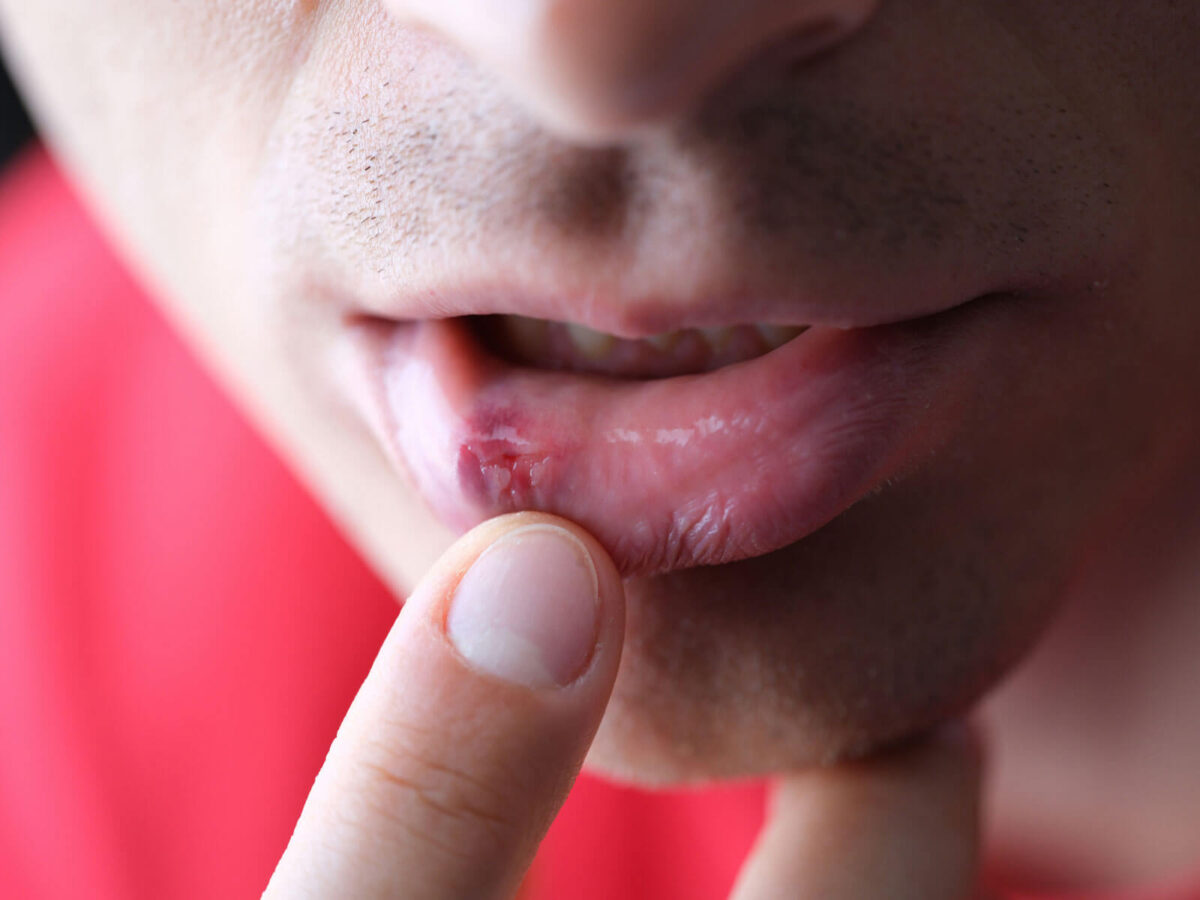
Patients describe them to me as a hole, and that’s not far off. Cleveland Clinic calls them small ulcers in the lining of your mouth, turning up at the base of the gums, under the tongue, or inside the cheeks and lips. White or yellow in the middle, with a red rim around them.
Size tells you what you’re dealing with. Under a centimeter, and it heals without a trace. The major ones run bigger, hurt considerably more, and occasionally leave faint scarring behind.
Half the time I know the answer from the patient pointing at the spot. Sting inside the cheek or under the tongue, and a cold sore is off the table.
What Do Cold Sores Look Like
Look along the border of the lip, not inside the mouth. You’ll see a cluster of small blisters with fluid in them. There’s usually a day or two of tingling before any of that appears, and antiviral cream applied in that window is worth far more than anything you do later.
The blister only lasts a few days before it bursts and weeps, and what’s left hardens into a scab. Your lip won’t look right again for another week or so. People read the crusted stage as the end of it, though the sore is still contagious right through.
Patients who get them regularly can usually feel one coming. The ones who do best are those who start treatment the moment that tingle appears rather than waiting to see what develops.
Not Sure Which One You’re Dealing With?
Get it looked at and treated properly instead of guessing.
Why Are Canker Sores Not Contagious But Cold Sores Are
Cold sores carry a virus. Canker sores don’t carry anything at all. Everything about who can catch what follows from there.
Skin-to-skin contact is how herpes simplex moves between people, and an awful lot of people already have it. Figures from the World Health Organization put 3.8 billion under-50s worldwide as carriers of HSV-1, which is around 64% of that age group. Once you have it, the virus stays permanently and flares up now and then rather than clearing.
Canker sores involve no infectious agent whatsoever. Sit next to someone with one, share a drink, kiss them even, and there’s nothing to catch.
What Are Canker Sore Causes
Canker sore causes cover more ground than most people expect. Minor injury tops the list, whether that’s biting your cheek, a sharp edge on a filling, or a toothbrush bristle catching the wrong spot at the wrong angle.
Stress and hormonal shifts play a role, as does a short list of food triggers. Pineapple and lemon do it to plenty of people. Then there’s sodium lauryl sulfate, the foaming agent in most toothpaste, which nobody expects to hear named as a trigger.
Blood tests turn up low B12 or iron in patients who keep getting them. Genetics factors in too, and canker sores run in families more often than not.
What Triggers a Cold Sore Outbreak
HSV-1 hides in your nerve tissue and waits. A bad flu, a week of poor sleep, or an afternoon in strong sun is often enough to bring it out of hiding.
I’ve had patients tell me theirs shows up every January without fail. Others notice it around their period, or after any stretch where they’ve run themselves down. Track it for a year, and the pattern is usually obvious.
There’s no cure for the underlying virus, which frustrates people more than the sore itself ever does. Managing triggers is the whole strategy available here.
How Do You Treat a Canker Sore
There’s no fixing a canker sore, so canker sore treatment means keeping yourself comfortable until your body closes it up. Numbing gel from the pharmacy buys you a meal without wincing. Warm salt water a few times a day keeps things clean.
Nothing acidic or spicy until it heals, unless you enjoy the sting. When someone comes to me with a large sore or the same one over and over, I’ll prescribe a medicated rinse or a topical steroid to move things along.
Most clear within one to two weeks with zero intervention. Anything sticking around past three weeks needs a proper look instead of more waiting.
Dealing With a Recurring Sore You Can’t Explain?
Let’s figure out what’s actually causing it.
When Should You Get a Mouth Sore Checked
Three weeks is my cutoff. Past that, or if the thing is getting bigger, or you’ve got a fever alongside it, stop waiting and get it looked at.
Frequent canker sores, several a year with no obvious trigger, are worth mentioning at a visit too. Ask for a blood test. Low iron or B12 turns up often enough that it’s the first thing I’d rule out.
Anything spreading past the lip, or a blister appearing anywhere near your eye, get seen the same day. Herpes simplex in the eye can damage the cornea, and that isn’t something to wait out.
FAQ
Can one type develop into the other?
No. A virus causes one and an inflammatory reaction causes the other, so neither converts.
Are frequent canker sores worth worrying about?
Several a year with no clear trigger is worth a blood test. A deficiency is the usual culprit.
How does someone catch HSV-1 without remembering it?
The virus usually arrives before you’re old enough to form memories, passed on by a relative during an outbreak.
Are canker sores contagious at all?
There’s nothing infectious in a canker sore. So no precautions are needed.
Conclusion
Once you know what is the difference between canker sores and cold sores, working out which one you have gets a lot simpler. Ask yourself where it sits and whether anyone else could catch it. Those two answers sort it in seconds.
Three weeks and still there? Same spot every few months? Book an appointment rather than running through another round of guesswork.
Dealing With a Mouth Sore That Won’t Quit?
Get it properly diagnosed and treated.

