
Blog
Dental hygiene tips for healthy teeth & gums
Dentinogenesis Imperfecta: Causes, Symptoms & Treatment
Purple. That was the word the mother used, sitting in my chair with her three-year-old, describing how the baby teeth looked under the kitchen lights. She’d assumed staining. What I found instead was the first case of imperfecta dentinogenesis I’d ever seen in practice, and I still think about it.
Most dentists see maybe a handful of these across an entire career. It’s rare enough that plenty of general dentists refer out the moment they suspect it, which is usually the right move given how specialized the ongoing care gets.
Diagnosis isn’t the hard part. Timing is. Catch it early, and there’s a real chance of protecting those teeth for years longer than they’d otherwise hold up.
TL;DR
- The tooth looks solid from the outside, but the dentin holding it up never formed properly.
- Blue-gray or amber teeth with a glassy quality to them. They chip and wear far faster than they should.
- Roughly 1 in 6,000 – 8,000 people have it.
- Type I arrives alongside brittle bone disease. Types II and III affect only the teeth, and type II is what most patients have.
- Crowns go on early to protect what’s there. Implants or dentures come later, once teeth start being lost.
What Is Imperfecta Dentinogenesis, Exactly
Imperfecta dentinogenesis is a genetic disorder that throws off how dentin forms. Dentin sits under the enamel and makes up most of a tooth’s structure, so when it doesn’t develop properly, everything built on top of it suffers.
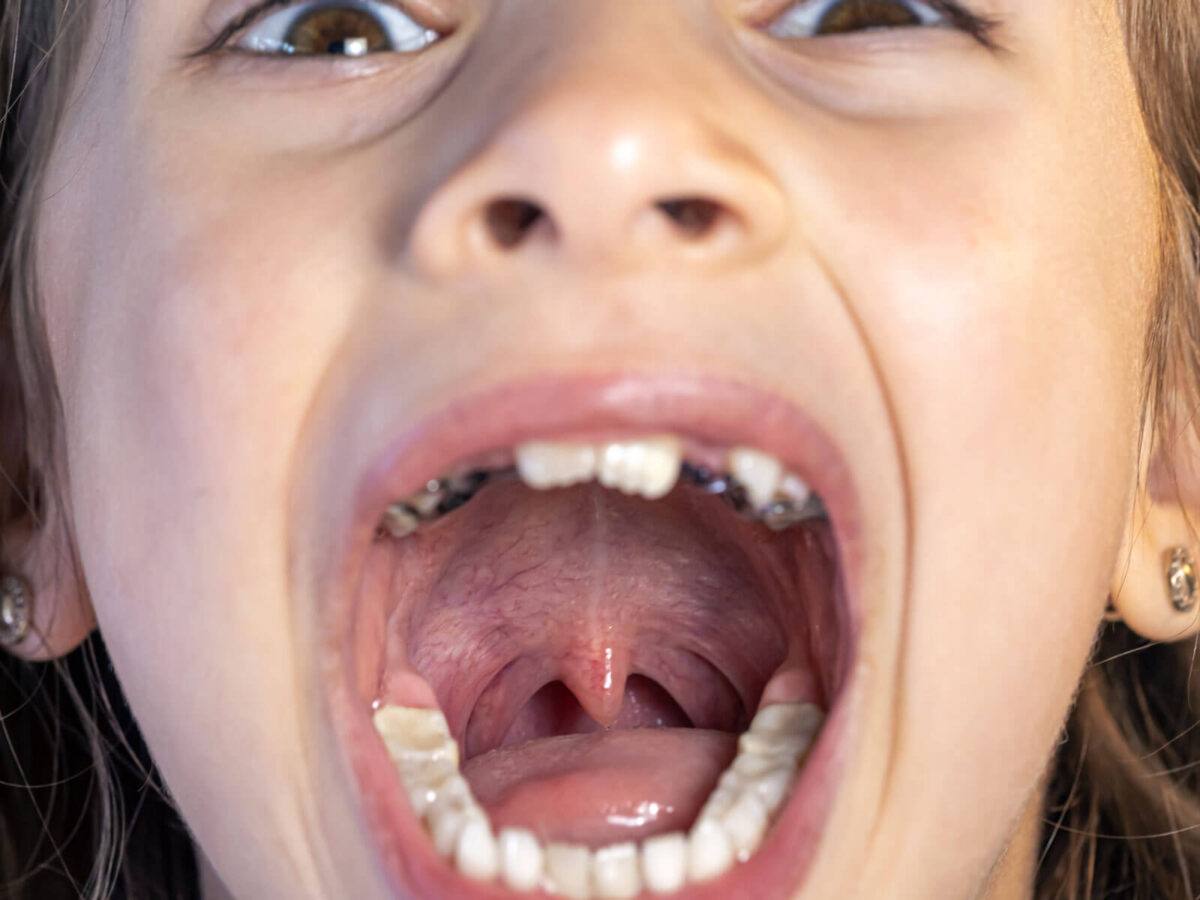
Weak, brittle, and oddly see-through is how these teeth present. Cleveland Clinic puts the color range anywhere from blue-gray to yellow-brown. The purple tint that mother described sat right in the middle of that.
Somewhere around 1 in 6,000 – 8,000 people have it, which puts it in an odd middle ground. Common enough that most dentists cross paths with a case eventually. Rare enough that few of us see more than a handful.
What Are the Different Types of Dentinogenesis Imperfecta
Three of them, separated mainly by whether the bones are involved alongside the teeth. Type I appears in people who also have osteogenesis imperfecta, and it usually hits the baby teeth harder than the adult ones that follow.
Type II is what I see most in my own chair. The bones are fine, and the teeth carry the condition alone, which makes it the most common of the three. Type III is rarer again, first documented in a population in Maryland and still sometimes called the Brandywine type.
Genetic mutations sit behind all of them. A gene called DSPP is the culprit in types II and III. Type I runs through the collagen genes that also govern how bone forms.
What Are Dentinogenesis Imperfecta Symptoms to Watch For
Parents almost always notice the color before anything else. Teeth take on a glassy quality, somewhere between blue-gray and amber depending on the child, which is where most dentinogenesis imperfecta symptoms start showing themselves.
Wear comes next. Enamel needs solid dentin beneath it to stay put, and without that support it chips away far faster than it should. Teeth start looking short and flattened years before you’d expect.
Then there’s outright breakage, sometimes from nothing more dramatic than chewing. If a fracture reaches the pulp, you’re dealing with pain and infection risk on top of everything else.
How Are Osteogenesis Imperfecta Teeth Connected to This Condition
Type I dentinogenesis imperfecta is what osteogenesis imperfecta teeth means in practice. Around half of children with the bone disorder end up with the dental version too.
Blame collagen. COL1A1 and COL1A2 are the genes involved, and collagen holds dentin together in much the same way it holds bone together. Damage one and you have compromised both.
Blue sclera, a faint blue tint to the whites of the eyes, sometimes appears alongside type I. I check for it the moment a child comes in with that translucent look to their teeth.
Noticed Unusual Discoloration or Wear in Your Child’s Teeth?
An early evaluation can protect their teeth for years to come.
What Causes Dentinogenesis Imperfecta
This runs in families. Only one parent needs to carry the mutated gene, since a single copy is enough to produce the condition in a child.
The DSPP gene sits behind types II and III. It codes for the proteins that give dentin its structure, and a mutation there produces dentin that comes out softer and less organized than it should be.
Type I takes a different genetic route, tied to the collagen mutations behind osteogenesis imperfecta rather than DSPP. Family history is usually the biggest clue long before any genetic test confirms anything.
When Does Dentinogenesis Imperfecta Usually Get Spotted
Dentinogenesis imperfecta is almost always spotted at a routine visit. That glassy edge on the teeth doesn’t look like staining or decay to anyone who has seen it before. What settles the diagnosis is the X-ray, where pulp chambers and root canals show up narrowed or closed off years ahead of schedule.
You can send off for genetic testing to identify the exact mutation, but treatment looks much the same either way. Family history tells you more in practice, and often the parent sitting in the waiting room has the same teeth.
Amelogenesis imperfecta has to be ruled out as well. Different tissue, different cause, but at first glance the two look almost identical across the room.
How Do You Get It Treated
Dentinogenesis imperfecta treatment changes shape as a child grows, and it’s never a one-time fix. The early work is about protecting baby teeth from wear, which means crowns or preventive fillings going in long before you’d normally consider them.
The same thinking carries over once permanent teeth arrive. Molars normally get full coverage crowns because they absorb most of the chewing force. Front teeth are often handled with composite bonding instead, where appearance matters more.
Some tooth loss becomes likely later in life no matter how well the early work was done. Implants or dentures take over at that stage, and the monitoring never really stops.
Can Adults Develop New Symptoms Over Time
The symptoms don’t change so much as deepen. Wear that began in childhood keeps accelerating without intervention, and pulp chambers that were open at ten can be almost fully closed by forty.
Some adults with type II develop hearing changes, a link researchers still haven’t fully explained. It isn’t universal, though it comes up often enough that I raise it during longer-term care conversations.
The patients I find most interesting are the ones diagnosed late, after decades of teeth breaking for no reason anyone could name. Having an answer tends to change how they approach their dental care entirely.
Living With Weak or Discolored Teeth and Not Sure Why?
Get a proper evaluation and a plan built around your specific case.
FAQ
My dentist mentioned amelogenesis imperfecta. Is that the same thing?
Different condition, though the two get confused constantly. That one damages the enamel on the outside of the tooth. This one starts underneath, in the dentin.
Will treatment eventually cure it?
Nothing cures a genetic condition. What crowns and bonding do is buy those teeth considerably more time than they’d get otherwise.
Do baby teeth and adult teeth suffer equally?
Both are usually affected, though rarely to the same degree. With type I, the baby teeth tend to come off worse.
Should parents look into genetic counseling?
Worth doing, given a single affected parent has a 50% chance of passing it on.
Conclusion
Catching imperfecta dentinogenesis early changes the whole trajectory of a child’s dental care. Crowns going on at four rather than fourteen can buy those teeth an extra decade. The condition is rare, though recognizable enough once you know what you’re looking at.
Translucent or oddly discolored teeth in a child, or breakage that keeps happening for no clear reason, deserve a proper evaluation. This isn’t something that sorts itself out with time.
Ready to Get a Clear Diagnosis and Treatment Plan?
Protect your child’s teeth with early, informed care.

